Concrete cube testing machine
Description
Compressive Strength Testing of Concrete: Cylinder vs. Cube TestConcrete cube testing determines a concrete's compressive strength by molding concrete into cubes, curing them for a set period (typically 7 or 28 days), and then crushing them in a compression testing machine until they fail. The test provides crucial data for quality control, ensuring the concrete mix meets design specifications for safety and durability.
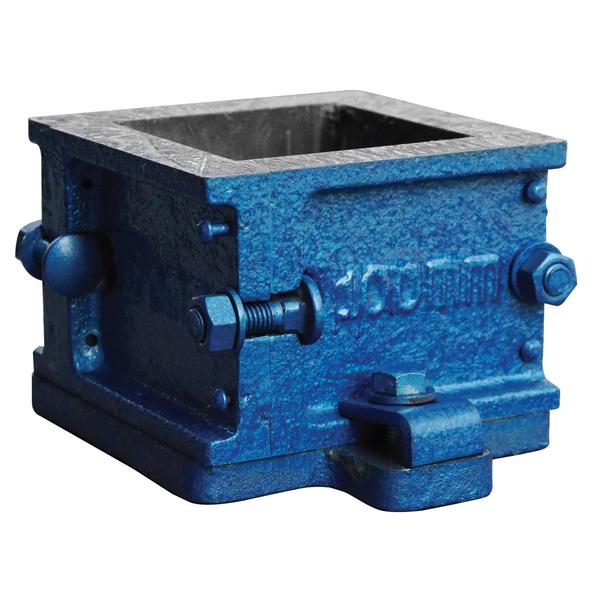
Casting the samples:Mix concrete according to the required specifications.Fill concrete into standardized cube molds, typically (150text{ mm}) sides.Compact the concrete using a vibrating table or manual compaction to remove air bubbles and ensure uniformity.Curing the cubes:After an initial setting period (around 24 hours), remove the cubes from the molds.Submerge the cubes in a controlled water curing tank or moist environment for a specified period, such as 7, 14, or 28 days.Testing the strength:Remove the cured cube from the water and let it dry slightly before testing.Place the cube between the platens of a compression testing machine.Apply a gradually increasing load to the cube until it fails (cracks or crushes).Record the maximum load at which failure occurs.Calculating compressive strength:Divide the maximum load (in N or kN) by the surface area of the cube (in (mm^{2})).The resulting value is the compressive strength, usually expressed in N/mm² (or MPa). Why it's important Ensures safety and durability: Confirms the concrete meets the strength required for the intended structure.Verifies compliance: Demonstrates that the concrete meets building codes and project specifications.Identifies problems: Helps detect issues in the concrete mix or curing process early on.Prevents costly repairs: Early quality control can avoid future structural failures and expensive remedial work.