Single Wheel Barrow
Description
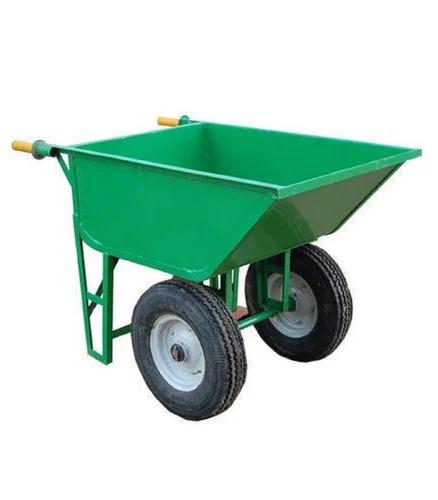
A single wheelbarrow is a versatile tool for transporting materials, featuring a single wheel for enhanced maneuverability in tight spaces and on uneven terrain. Key details include its construction (typically a metal body and frame), a wheel with ball bearings for smooth movement, and a lever-action handle system that uses the wheel as a fulcrum to make lifting heavy loads easier. They come with various capacity ratings, from about 65 to 150 liters or more, and load-bearing capacities of up to 150 kg, depending on the model.
Design and construction
Frame: A robust steel chassis is often used for durability.
Body: Made from sheet metal, often with a rolled top edge for added strength and a finished look.
Wheel: A single wheel is the defining feature. It can be pneumatic (air-filled) or solid, often with a ball bearing for smooth rolling. A larger wheel diameter generally reduces rolling resistance.
Handles: Typically feature ergonomic grips and a design that allows the user to leverage the wheel as a fulcrum for lifting.
Wheel and axle: The axle's size and ball bearing specifications are crucial for load capacity and smooth movement.
Features and specifications
Maneuverability: The single wheel allows for easier handling on planks, in tight corners, or on sloped and uneven surfaces compared to multi-wheeled versions.
Load capacity: Varies by model, with some rated for up to 150 kg or more.
Capacity: Varies by model, with capacities often in the range of 65 to 150 liters.
Durability: High-quality materials and construction, such as two-coat paint and a sturdy frame, ensure a long lifespan and resistance to wear and rust.
Weight: Despite being heavy-duty, many models are designed to be lightweight and user-friendly to reduce fatigue.
Maintenance: Many are low-maintenance, especially those with a reliable design and rust-resistant features.
Uses
Construction sites
Gardening and landscaping
Farming
Industrial applications
Material handling