


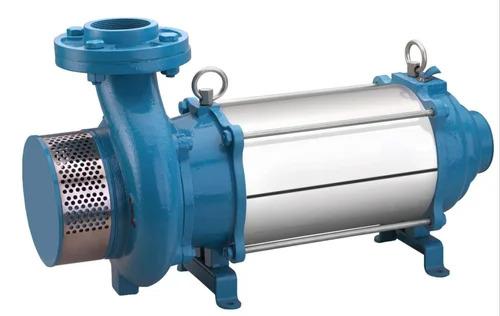
A submersible motor is a specialized electric motor designed to operate underwater, sealed in a waterproof casing and directly coupled to a pump. It works by pushing fluid to the surface, making it highly efficient and eliminating the need for priming. The surrounding fluid cools the motor, preventing overheating, and the motor's design makes it durable and suitable for applications like deep-water wells, drainage, and industrial pumping. How it works Design: A submersible motor is a hermetically sealed, waterproof unit. It is designed to be placed directly in the fluid it will pump, such as in a well, borehole, or sump. Pumping action: Unlike surface pumps that pull fluid, a submersible pump pushes it to the surface. This is more efficient because the pump's own weight and the surrounding liquid's pressure help it operate, and it is less prone to cavitation (the formation of vapor bubbles that can damage parts). Cooling: The fluid surrounding the motor acts as a natural coolant, dissipating heat and preventing the motor from overheating during continuous operation. Many designs have an internal cooling system with a small impeller to keep the coolant circulating. Power: An induction motor is typically used, with the motor's stator providing electricity and its shaft directly connected to the pump's impellers. These can be single-phase or three-phase, depending on the application. Pressure and flow: The pump uses impellers to accelerate the fluid, with each stage of impellers and diffusers increasing the fluid's pressure. A non-slam check valve at the end of the pump helps prevent hydraulic shock. Key advantages High efficiency: Pushing liquid is more energy-efficient than pulling, and there is no loss of head from suction. No priming needed: The pump doesn't need to be primed because it is already submerged in the fluid. Reduced cavitation: Submersion prevents cavitation, which prolongs the life of the pump. Durability: Submersible motors are built to be durable, corrosion-resistant, and able to withstand harsh environments and contaminants like sand and silt. Longevity: They have a long lifespan, often 8 to 15 years, due to their durable design and cooler operating temperature. Low maintenance: The combination of a simple design, robust materials, and resistance to contaminants means they require less maintenance compared to other types of motors.
Address
674/3A, L&T By Pass Road, Pirivu, Venkitapuram, Neelambur, Tamil Nadu 641062
Coimbatore, India, 641062