


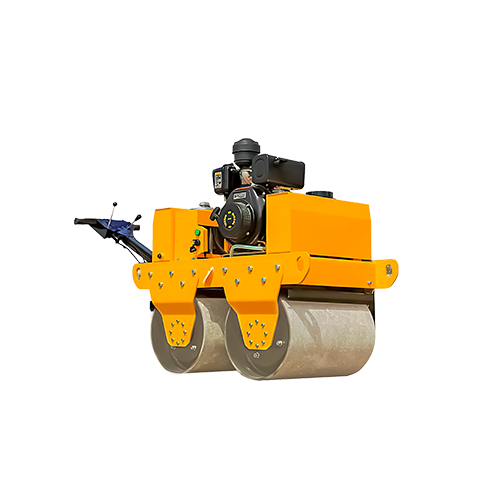
Vibratory drum rollers are construction machines that use a heavy, steel drum that vibrates to compact materials like soil, gravel, and asphalt. The vibration allows the material's particles to settle closer together, increasing density and stability more efficiently than a static roller. They are crucial for building roads, parking lots, and other projects that require a strong, stable foundation. How they work Vibration generation: The vibration is created by eccentric weights inside the rotating drum, which are driven by an engine and a transmission system. Compaction process: As the drum rolls, the vibrations cause the material particles to shake and move closer, filling air voids and creating a denser, more stable layer. Combination of weight and vibration: The roller's heavy weight provides static pressure, while the vibration provides a dynamic force. The combination of both is what makes them highly effective. Adjustable settings: Operators can adjust the frequency and amplitude of the vibration to suit the specific material and compaction depth required for the job. Applications and advantages Versatility: They are used for a wide range of projects, including road construction, airport runways, and landfill development. Efficiency: They can achieve high levels of compaction in fewer passes compared to static rollers. Effective on granular materials: They are particularly good at compacting loose materials like gravel, crushed rock, and sand. Durability: The compaction provided by these rollers improves the durability and longevity of the final surface, reducing the need for future maintenance.
Address
674/3A, L&T By Pass Road, Pirivu, Venkitapuram, Neelambur, Tamil Nadu 641062
Coimbatore, India, 641062